
Copper, Gold, Emerging Markets and "Going Long" the Iranian People
The Coming Copper Crunch, China's Demographic Decline, Should You Stay Long Gold?, EM Equities Still Rising, "Go Long" the Iranian People

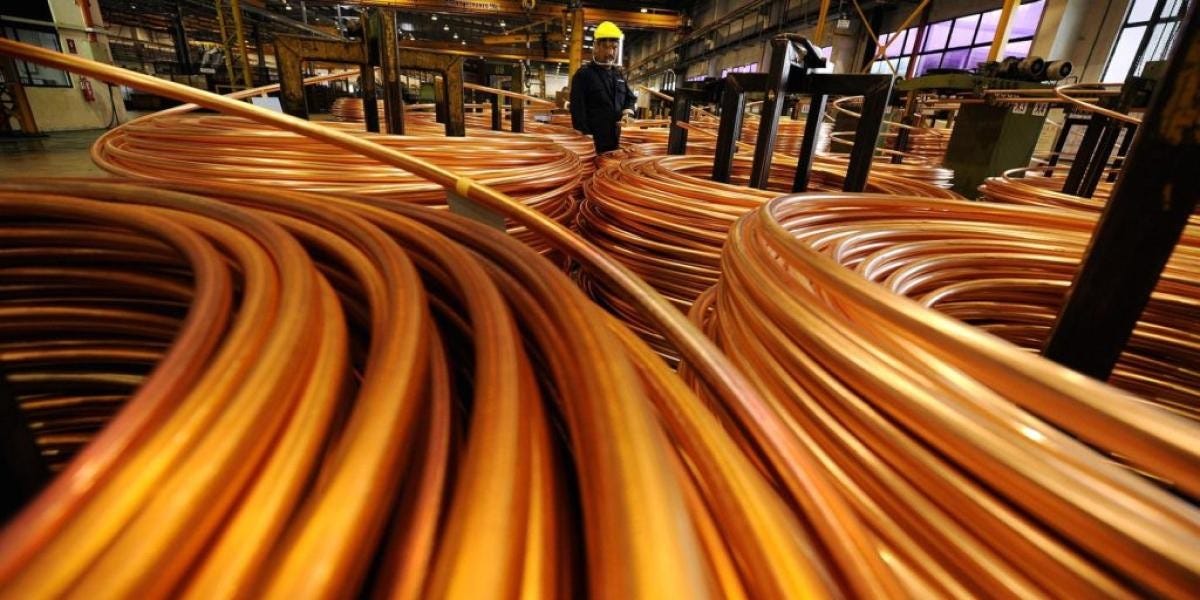
Every Substack newsletter is indebted to two things: its readers (thank you!) and, well, the internet, of course. And the internet itself is indebted to copper, the unglamorous metal that still carries the bulk of the world’s connectivity. Even in the age of fiber-optic cables—mostly glass—copper remains indispensable.
Copper’s reach extends far beyond the internet. It wires homes and cities as well as the motors that drive factories, the grids that move electricity, and the vehicles that move people and goods. Your air conditioner or heater needs copper, and so does your smartphone and refrigerator. Copper is also vital to the medical equipment that saves lives, renewable energy systems, and defense infrastructure. If copper disappears, our contemporary world simply does not function.
That’s why the new S&P Global report on copper should make for alarming reading - Copper in the Age of AI: Challenges of Electrification. The report notes that the world is headed for “a potential 10 million metric ton copper shortfall by 2040 without meaningful supply expansion.”
The report was led by a friend of Emerging World, the distinguished scholar and energy historian Daniel Yergin (whom we interviewed back in 2021, see below).
With copper demand surging as hungry AI data centers and rising defense spending gobble up supply, the prospect of copper shortages has become a reality. That’s partly why the metal’s price has been rising. If you were long copper in 2025, you would have seen a 44% windfall.
S&P Global’s study projects a 50% increase in demand by 2040. They note that “meeting the call on copper confronts significant supply obstacles both above and below ground.” Put starkly, they write: “the demand for copper will outrun supply unless there is major adjustment across the copper supply system.”
And the key: “Here, in short, is the quandary: copper is the enabler of electrification, but the accelerating pace of electrification is an increasing challenge for the metal.”
We’ll continue to watch this space closely.
China, Copper and Demographics

One of the reasons why copper - and so many other metals - have been so much in demand over the past four decades has been the economic rise of China. A voracious buyer and miner of metals, the transformation of China has been powered by those metals as well as energy and labor - the triumvirate behind China’s massive infrastructure expansion over the past four decades. The “China story,” for many outside observers, is the rise of a manufacturing powerhouse that has shaken the world. This is, of course, true, but there is another story that gets less attention: the rise of an infrastructure powerhouse.
In roughly three decades, China has built a nationwide network of nearly 200,000 kilometers of expressways, expanded its rail system to more than 160,000 kilometers (including the world’s largest high-speed rail network), constructed or modernized hundreds of airports, and developed dozens of world-class ports that now anchor global trade flows.
Copper is interwoven throughout this extraordinary infrastructure build-out. Today, China consumes roughly 55% of the world’s refined copper, up from less than 10% in the early 1990s, making it by far the single largest driver of global copper demand.
That’s why copper watchers are also close China watchers.
So, the question is: can China sustain its insatiable copper demand in the face of declining demographics?
This week, China announced its lowest birthrate since records began in 1949. Deaths continue to outnumber births, marking yet another year of population decline.
Still, with all of the talk of China’s population declining, it is worth remembering that it is a slow process, and the country still boasts provinces with populations larger than most European countries, and an urban population (~950 million) that’s about three times the size of the entire U.S population. So, yes, China’s numbers are declining, but its living standards continue to rise, so you can expect demand to remain steady for the metals - like copper - that power our modern world.
Oh, and those factories keep churning out goods - in record numbers. See below:
China Trade Surplus Hits $1.1 Trillion
This from the New York Times:
“China announced on Wednesday the world’s largest trade surplus ever, even adjusting for inflation, as a tsunami of exports flooded markets around the world last year.”
“China’s surplus, the value of goods and services it sold abroad versus its imports, reached $1.19 trillion, an increase of 20 percent from 2024, according to data released by the country’s General Administration of Customs. The number had already exceeded $1 trillion through November.”
Should You Stay Long Gold?

The Wall Street Journal explained why everyone is piling into gold, and why gold is surging toward $5,000. They point to five factors for gold’s dizzying rise. The first is the “debasement trade,” buyers who are worried about the debasement of the U.S dollar and other major currencies. Lower interest rates are also driving gold purchases, the WSJ notes, as is central bank buying of the precious metal. “Central banks picked up their pace of gold purchases in 2022,” the WSJ reported. The article also cited “expensive stocks” that make investors nervous as another driver of gold purchases.
Finally, they point to momentum. “Gold is a good bet to keep gaining, if for no other reason than gold rallies tend to be long-lasting,” the WSJ wrote. “In five of the six years before 2025 that gold futures rose by at least 20%, they climbed again the following year. And in those five years, the average increase was more than 15%, according to Citi analysts. The pattern held in 2025, when gold followed 2024’s 27% increase with a 65% gain.”
So, gold may still have some room to run.
Emerging Markets Equities…Still Rising
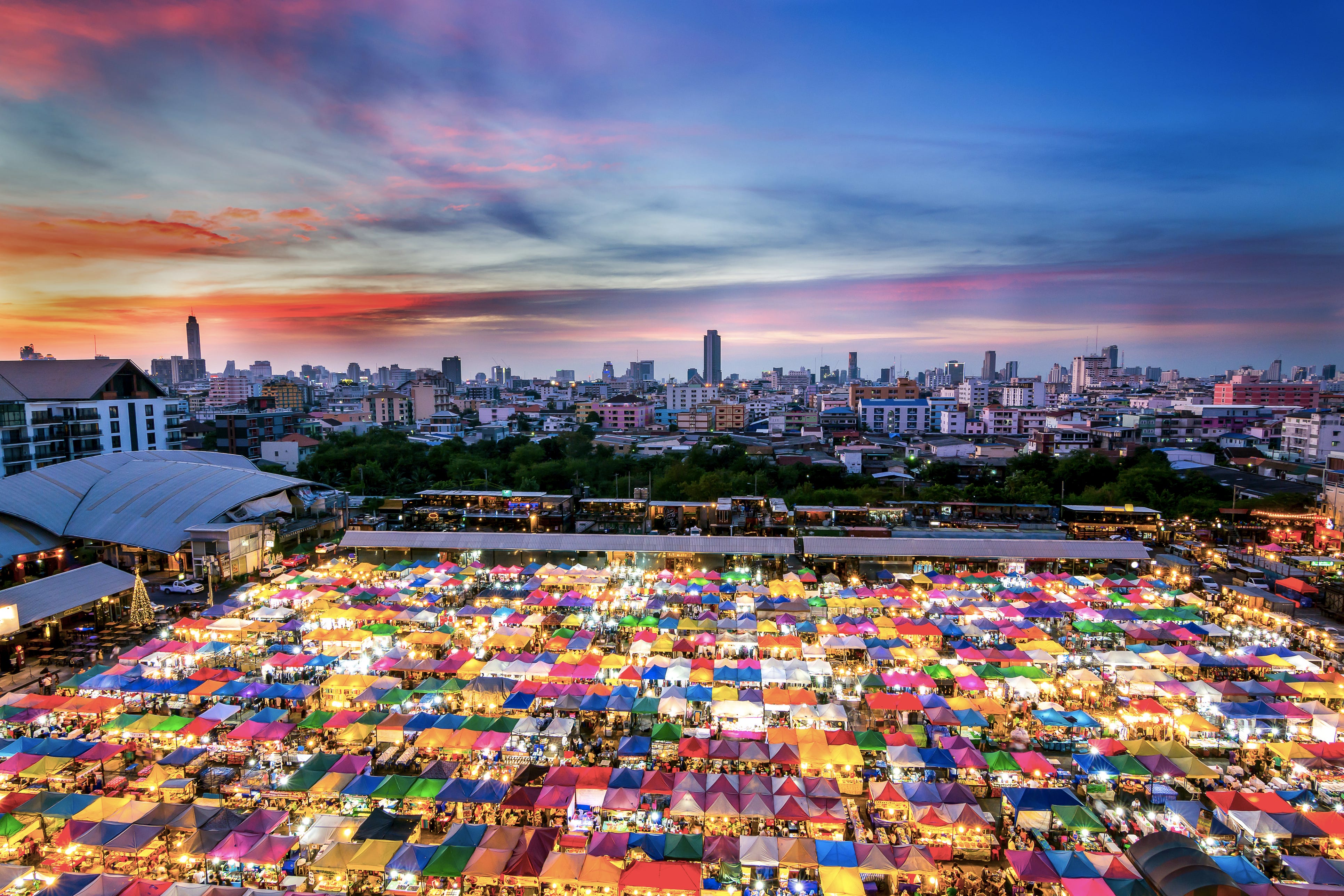
Last year, emerging markets handily outperformed the S&P 500 - 31% returns on the MSCI EM Index vs 16% on the S&P. This marked the first time since 2017 that EM beat the S&P, and investors are taking note.
The emerging markets specialist Ashmore reported its first quarterly net inflow into its funds in more than four years.
Over at my Forbes column, I spoke to some of emerging markets’ leading lights - Joyce Chang of J.P Morgan, Malcolm Dorson of Global X ETFs, Varun Laijawalla at Ninety One, and Andrew Keiller at Baillie Gifford - and they all generally agreed: the emerging markets run still has some room for growth.
As Andrew Keiller said: “Less than a third of global funds are overweight emerging markets. We don’t think this is short-lived. In fact, we think there are many good years to come,” he said.
You can read the piece here - Emerging Markets in 2026 - Is the Rally Built to Last?
I’ll have more on this story soon.
Go “Long” the Iranian People

There was an unexpectedly touching moment in the FT’s Unhedged podcast (which I highly recommend, by the way). Toward the end of each show, hosts Katie Martin and Rob Armstrong go “long” or “short” on various investment themes, stocks, or even political or cultural trends. Rob Armstrong decided to “go long the Iranian people.” He described their gallant struggle for freedom in the face of immense brutality, and hoped for a day when they would be free. Hear, Hear, Robert.
This is a story I know well. As a young journalist, I covered Iran in the late 1990s and early 2000s for the Washington Post and others. I had witnessed first-hand heavy government crackdowns on protestors. I saw militia men on mopeds, wielding heavy sticks and throwing people into unmarked vans before carting them off to horrific prisons. I saw Revolutionary Guardsmen on fat motorcycles circling the city as helicopters buzzed overhead amid road blocks criss-crossing the city.
So, from my perspective and anyone who has been watching closely, the Islamic Republic of Iran deploying violence against its own people is not new. Still, the scale and scope of the recent violence takes their brutality to new levels. The United Nations estimates that the death toll could reach 20,000.
Read this chilling Wall Street Journal report on how the authorities turned off the internet and even electricity, then used live fire on protestors.
There’s also this equally chilling New York Times report on the aftermath of the protests. It opens with these lines:
“The families rooted frantically through the piles of corpses, so crammed together that the living had to take care not to step on the dead.”
“Wailing and cursing, they searched the body bags for the number assigned to their loved one for burial — a surreal veneer of bureaucracy imposed onto a chaotic nightmare.”
We may not know the full numbers anytime soon, but we eventually will because a regime that kills its own population with such reckless disregard is not long for this world.
Siamak Namazi, the astute strategy advisor and longest-held American-Iranian hostage in Iran’s notorious Evin Prison (freed in 2023 after eight years in captivity), put it simply and starkly when he wrote: “The last few weeks in Iran have retaught us lessons we already knew — lessons written in blood, courage, denial, and cruelty.” He wrote:
“We were reminded that the clerical regime’s ineptitude in governing is matched only by its aptitude for repression and mass murder. Moreover, events have once more demonstrated that although the overwhelming majority of Iranians is utterly fed up with clerical rule and capable of astonishing bravery, it remains outmatched by a state whose survival strategy is simple and ruthless: kill enough people, fast enough, to terrorize the rest into submission.”
Read Siamak’s piece in full here - Iran’s Coming Collapse: Regime Collapse is Likely - Democracy is Not
For some background and a deep dive on the Islamic Republic of Iran before the most recent protests erupted, read Karim Sadjadpour’s excellent essay - The Autumn of the Ayatollahs - in Foreign Affairs.
I’ve known Karim and Siamak for more than two decades. We’ve traveled together in Iran in the early 2000s, and both are superb analysts. Check out their work.
And, ultimately, heed Rob Armstrong’s advice: go long the Iranian people. This is a population that has shown breathtaking courage over the years. This fight is not over and darker days may even be ahead, but when the day comes that the Iranian people are free and unleashed, they will leverage their talented and educated population with a country teeming with natural resources to build one of the most dynamic economies in the region, achieving the prosperity and dignity they richly deserve.
“You can’t cross the sea merely by standing and staring at the water.”
― Rabindranath Tagore